πŸ“ž Call for a Free Quote: 888-619-5502

Concrete Driveway Repair in Limerick, PA

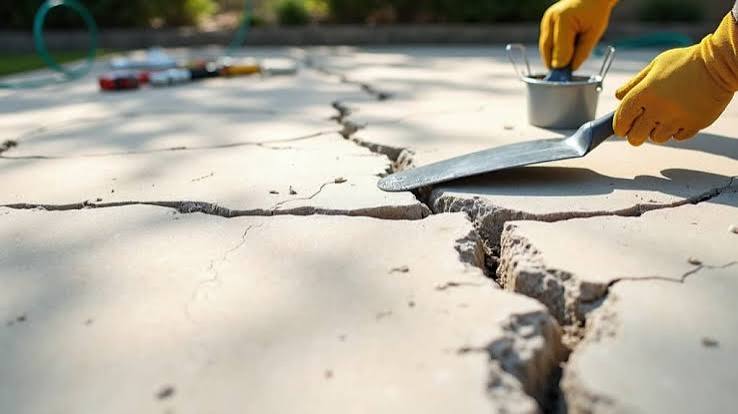
A technician applying crack filler to a cracked concrete driveway slab

Concrete driveways are common in the newer subdivisions that have gone in around Limerick as the township has grown over the past few decades, and they fail differently than asphalt does. Instead of potholing, concrete tends to crack along control joints, spall at the surface from freeze-thaw and road salt exposure, or settle unevenly where the sub-base has shifted, leaving one slab section higher or lower than its neighbor β€” a trip hazard as much as a cosmetic problem.

We repair cracked and spalled concrete sections, and for driveways with uneven settling we can often level slabs without a full tear-out, depending on how much the sub-base has shifted. For concrete that's cracked extensively or has multiple failed sections, resurfacing or targeted slab replacement is usually more cost-effective than trying to patch each crack individually, since concrete patches are visually obvious in a way asphalt patches generally aren't.

Salt is worth mentioning specifically β€” it's the fastest way to accelerate concrete surface damage over a Pennsylvania winter, and driveways that get heavily salted tend to show spalling and surface scaling years before driveways that don't. We can talk through de-icing alternatives that are gentler on concrete as part of any repair or resurfacing job.

πŸ“ž Call 888-619-5502

Request This Service

* Indicates required field

Salt Damage Is a Real Factor Here

Rock salt and other chloride de-icers cause concrete to spall and scale at the surface over repeated freeze-thaw cycles, and it's one of the most common causes of premature concrete driveway failure we see in this area. Calcium magnesium acetate and similar concrete-safe de-icers cost more but do meaningfully less damage over the life of the driveway.

How We Repair a Cracked or Spalled Slab

We saw-cut along the nearest control joint or a clean line around the damaged area rather than trying to feather a patch into a rough, broken edge, since concrete patches bond and hold better against a straight cut. The damaged concrete comes out down to sound material, and if the sub-base underneath has washed out or compacted unevenly, we rebuild that base before any new concrete goes in β€” pouring fresh concrete over a bad base just moves the same failure a few years down the road. New concrete is formed to match the existing slab's thickness, poured, finished to blend as closely as possible with the surrounding texture, and given proper cure time before it carries vehicle weight.

Slab Leveling vs. a Full Repour

When a slab has settled unevenly but the concrete itself isn't cracked or badly deteriorated, leveling β€” raising the low slab back to grade by pumping material underneath it β€” is usually the more cost-effective fix, since it corrects the trip hazard without tearing out concrete that's still structurally fine. Leveling isn't the right answer for every settled slab, though; if the slab is cracked in multiple places on top of being uneven, or has settled so much that leveling would leave visible seams and elevation differences with the sections next to it, a full repour of that section is usually the better long-term choice. We check both the extent of settling and the condition of the concrete itself before recommending one over the other.

What Drives the Cost of a Concrete Repair

The number and size of slabs affected is the starting point β€” repairing one cracked slab costs a lot less than several scattered across the driveway. Access matters more here than with asphalt, since concrete work sometimes requires a concrete truck to reach the pour site, and a driveway with tight side-yard access or obstacles blocking a direct path adds complexity and cost. Whether the sub-base needs rebuilding versus just the surface concrete is another major factor β€” a cracked slab sitting on a solid base is a straightforward repour, while a slab settling because the ground underneath washed out means excavation and base work before the concrete part even starts.

Signs Your Concrete Driveway Needs Attention Now

Surface spalling β€” small flakes or chips popping off the top layer of concrete, often leaving a pitted, rough texture β€” is usually driven by freeze-thaw cycling combined with de-icing salt, and it gets worse each winter it's left alone. A crack wider than about a quarter inch, or one where you can see it's deeper than surface-level, has usually already let water in and will keep widening through freeze-thaw cycles. A noticeable height difference between two adjacent slabs is both a cosmetic issue and a trip hazard, and it's a sign the base underneath has shifted. Standing water that doesn't drain within a few hours after rain often means a slab has settled toward the middle rather than sloping properly toward the driveway's edge.

Curing Time and Weather for Concrete Work

Fresh concrete needs temperatures consistently above about 40Β°F to cure properly without the risk of the water in the mix freezing before the concrete has set, which is why most repour and replacement work in this area gets scheduled outside the coldest stretch of winter. A new patch or slab is typically safe for foot traffic within a day or two but needs closer to a week before it can reliably handle vehicle weight, and full strength takes about 28 days β€” we'll tell you specifically when your driveway is ready for regular use rather than a generic timeline that doesn't account for the weather during your project.

How Concrete Failure Differs From Asphalt

Asphalt tends to fail gradually and unevenly across a surface β€” cracking, then rutting, then potholing in the worst spots β€” while concrete tends to fail at specific points: along control joints, at slab edges, or as surface spalling from salt exposure, with the rest of the slab often staying structurally sound even as one area deteriorates. That difference is why concrete repair is more often a targeted, per-slab decision than the broader resurfacing approach that works for asphalt, and it's part of why a concrete driveway can look worse in one spot while the rest of it is in genuinely good shape.

Warranty on Our Concrete Work

Patches and repoured sections are warrantied against cracking or separation caused by our workmanship β€” if a patch we install fails structurally within the warranty period, we return and correct it at no cost. Normal concrete behavior like minor shrinkage cracking within a control joint, or gradual color variation as new concrete ages and weathers to match the surrounding slab, isn't a defect and isn't covered, and we'll explain that distinction clearly before the work starts so there's no confusion later.

Concrete Driveway Repair FAQs

Can you repair a single cracked slab without replacing the whole driveway?

Usually, yes. Concrete driveways are poured in sections separated by control joints, so a crack or spalled area confined to one or two slabs can typically be cut out and repaired, or that section replaced, without touching the rest of the driveway. It's a different situation than a driveway with cracking or settling spread across most of the slabs, where patching section by section stops making financial sense.

What causes a concrete slab to sink or sit higher than the slab next to it?

Uneven settling almost always means the compacted base underneath one slab has shifted, washed out, or never compacted properly to begin with. Depending on how much it's moved, we can sometimes level the slab back into place without a full tear-out; more significant settling usually calls for removing and repouring that section on a properly rebuilt base.

Will a concrete patch match the color of the rest of my driveway?

Not perfectly, at least not right away β€” fresh concrete patches typically look slightly different from surrounding, weathered concrete until they age and tone down over a season or two, and an exact match isn't something we'll promise. If a uniform look matters more than cost, resurfacing the whole driveway with a new overlay is the better option.

Areas We Serve

Proudly providing driveway repair across the region:

Get Concrete Driveway Repair in Limerick Today

Fast response, upfront pricing, and friendly local pros. Call now for a free quote.

πŸ“ž Call 888-619-5502